
12 Yoga Poses To Undo The Damage Of Your Desk Job

Yoga Pose2 You may joke that your job is slowly killing you, but it might actually be true.

And while job-related stress seems like the main culprit when it comes to health and your career ( it can have negative health effects as far ranging as increased heart attack risk, depression or premature aging), there’s another danger lurking in the office: Sitting.

“Sitting is the new smoking,” warned Wired magazine earlier this year. And indeed research links a highly sedentary lifestyle with a shorter life span and increased risk of chronic diseases like heart disease and diabetes, among other serious health problems.

As most desk jockeys know (and feel), sitting over a keyboard for hours can contribute to tightness in the hips and legs, in addition to neck, shoulder and back pain and discomfort. Camping out all day at a desk can also create an unhealthy posture — that you take with you when you leave for the day — in which the back and shoulders hunch down and the neck protrudes forward.

“There are a lot of very negative physical reactions created when the body’s not in movement,” Vyda Bielkus, certified yoga instructor and founder of Health Yoga Lifestudio in Boston, tells The Huffington Post. “Between sitting eight hours a day and then being in the elevator looking at your smartphone, you’re totally misaligning the spine.”
Continue Reading

Sugary Drinks Tied to Preschoolers’ Extra Pounds

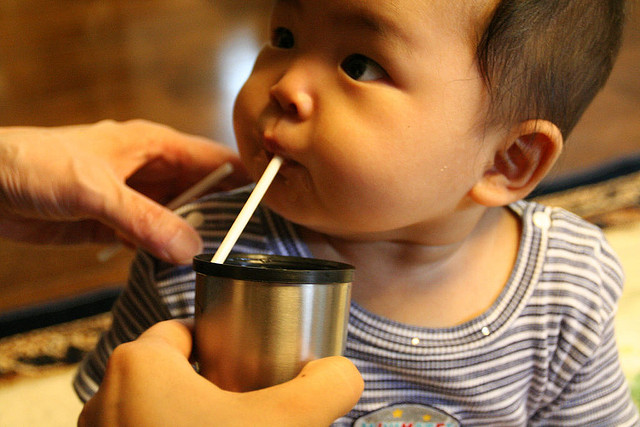
Drink Preschool children who regularly have sugary drinks tend to pack on more pounds than other youngsters, a large study of U.S. children suggests.

Researchers found that among the 2- to 5-year-olds they followed, those who routinely had sugar-sweetened drinks at age 5 were 43 percent more likely to beobese than their peers who rarely had those drinks.

In addition, 2-year-olds who downed at least one sugary drink a day gained moreweight over the next few years than their peers.

The results, reported online Aug. 5 and in the September print issue of the journalPediatrics, add to evidence tying sugar-laden drinks to excess pounds in older kids. And although the study cannot prove it’s the beverages causing the added weight, experts said parents should opt for water and milk to quench preschoolers’ thirst.

“We can’t say for sure that cutting out sugar-sweetened beverages would prevent excess weight gain,” said lead researcher Dr. Mark DeBoer, a pediatric endocrinologist at the University of Virginia in Charlottesville.

“[But] there are healthy sources of calories, and there are less healthy sources,” he said. “Sugar-sweetened beverages don’t have other nutritional benefits.”

Water, on the hand, is a sugar-free way for kids to hydrate. “And milk,” DeBoer said, “has vitamin D, protein and calcium.” Plus, he added, the protein and fat in milk make young children feel full, so they may eat less than they do when their diets are filled with sugary — but less satisfying — drinks.

Plenty of factors influence childhood obesity, including genes, overall diet andphysical activity, said Dr. Anisha Patel, an assistant professor of pediatrics at the University of California, San Francisco.

Continue Reading

8 Back-to-Basics Nutrition Tips

Grocery If you’re flicking through Healthy Living, it’s likely that you spend at least some time thinking about what you eat and how you eat it. Staying on top of your nutrition is tough for the average person. Work, travel, time, money and many other factors can get in the way of your “dream” diet.

I want to clarify from the get go that I am NOT a dietitian and I’m guessing that you’re probably not either. That doesn’t mean that we can’t figure out some basics for ourselves — some rules to fall back in when life gets in the way and let things slip a little.

1. CUT OUT JUNK AND PROCESSED FOODS

“What does he mean by junk food?” Come on now, you know exactly what I’m referring to. The stuff you hide in the kitchen and feel guilty about eating and the food you know you shouldn’t be eating but do anyway. If it’s lying around the house, throw it out and stop buying it.

I find it helps to think of food as nutrition and not as a reward, entertainment or an emotional buffer.

2. EAT A LITTLE LESS

This one isn’t rocket science. Try to keep a handle on portion sizes if you want to tackle your nutrition head on. If you’re in charge of the cooking, scale back the amount you’re putting on each plate. Even something as simple as switching out your jumbo-sized diner plates for something smaller can help.

Continue to Number 3

Salmon Scramble

SALMON SCRAMBLEThis Menu is for 4 People. It is suitable for people on ALL stage of a low carb Program

A lovely light meal for when you just want something quick and tasty.

What you’ll need:

6 Medium Eggs
200g or 8oz can smoked salmon
3 tsps milk
1 small onion, minced
1 green pepper, finely chopped
100g or 4oz strong cheese, Grated. Mature cheddar is ideal
1 clove garlic, minced
50g or 2oz butter
Salt & pepper
2 Sliced tomatos, Lettuce & grated cheese to serve

Follow this link for the cooking directions

The Dangers of Food Allergy Bullying

Bullying Let’s be honest: raising children and teens isn’t easy. As parents, we come to many forks in the road when deciding how to react to specific situations with our kids. No matter the parenting style — laid-back, nurturing, authoritarian, over-bearing, or (likely) a fusion of multiple approaches — whichever direction you take is influenced by past experience when you’ve had to cope with and support your child through issues he or she has faced. I began to see stories recently, this summer in particular, about children in middle schools and high schools bullying other students that have food allergies, and I was taken aback. If my child had severe food allergies, how would I deal with this kind of problem?

All forms of bullying — on social media, school grounds, or in the workplace — follow the same model; the perpetrator has a thirst to elevate his or her status over the victim. I want to shed light on food allergy bullying not only because it inflicts so much psychological devastation on our kids and teens, but also because these allergies can be life-threatening.

For example, a classmate who doesn’t realize the gravity of the situation might sneak peanut butter into the lunchbox of a child who can’t touch, smell or ingest peanuts. That ‘joke’ ends with a trip to the emergency room. A bully crosses the line with verbal taunts; it’s even more frightening if the harassment fuels the possibility of a severe physical reaction. However, it is possible to help stop food allergy bullying, and that effort starts by preaching reminders like these.

Bullied kids and teens will start feeling unsafe, may become afraid to go to school, and might not talk to you about it; this is even more worrying if their lives are in danger because of severe allergies.

But I realized that it’s not just kids who bully out of ignorance. Erika Dacunha, a young teen with multiple severe allergies, wrote a beautiful article about her struggles. What struck me most was her account of the parents who complained that Erika’s allergies would inconvenience their children and dip into the school’s funds. Apparently some later apologized after her mother explained that food allergies weren’t a lifestyle choice. But this is proof that we don’t just need to educate children.

Continue Reading