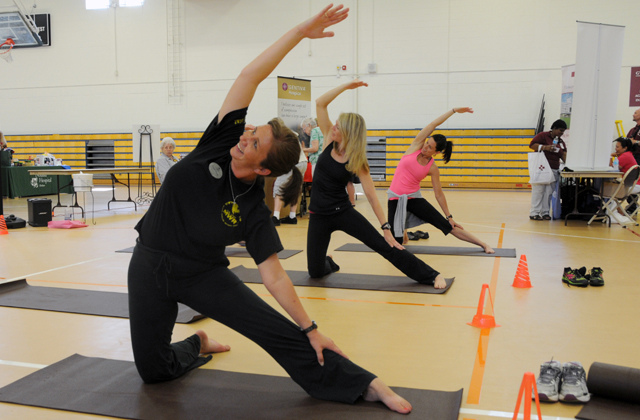
Exercise Can Turn Bad Fat Into Good Fat

FitnessResearchers have found that exercise helps “bad” fat transform into a form of “good” fat that is more metabolically active.

The findings were presented at the American Diabetes Association’s 73rd Scientific Sessions.

[header 3]Humans have two types of fat:[/header]

– Brown fat (the good fat) – this type of fat burns through calories to generate body heat.
– White fat (the bad fat) – this fat develops as a result of storing excess calories, it is just an energy reserve.

People with more brown fat are generally slimmer and better able to stay warm when it is cold, whereas individuals who have high levels of white fat tend to live more sedentary lifestyles.

In this study, the researchers found that mice and men who underwent an intense exercise regime experienced a browning of their subcutaneous white adipose tissue (SCWAT).

Watch the video here

Mind Over Diet?

Eat Study suggests people’s beliefs about causes of obesity influence their eating habits, weight.

People’s views about what causes obesity may influence both their eating habits and their weight, new research shows.

The finding suggests that public health campaigns may need to factor that into the equation to be effective, the study authors noted.

To examine the issue, the researchers conducted a series of surveys across five countries on three continents. Published recently in the journal Psychological Science, the study found people in Korea, the United States and France all held similar beliefs that either poor diet or lack of exercise was the leading cause of obesity.

Continue Reading

Exercise Improves Outcomes in Ankylosing Spondylitis

exercise ballWorking with an exercise ball significantly improved muscle strength and ability to walk in patients with ankylosing spondylitis (AS), did not worsen disease activity, and increased well-being, according to a new study.

“Although exercise is recommended for AS patients, its benefits have not been clearly defined, and patients can be reluctant to try it,” said lead investigator Marcelo de Souza, PT, MSc, from the Federal University of Sao Paolo in Brazil, in a press release

His colleague, Fabio Jennings, MD, also from the University of Sao Paolo, presented the study results here at the European League Against Rheumatism Congress 2013.

All 60 patients had received at least 3 months of standard drug treatment before study enrollment and continued their medication during the study. Thirty patients were randomized to an exercise program with the exercise ball and 30 were randomized to no prescribed exercise and served as the control group.

Continue Reading

When it comes to fitness, size doesn’t matter

Exercise This year, I celebrated my 30th anniversary in the fitness industry. Reflecting back, the industry has come a long way since the early ’80s, when doing excessive repetitions of exercises at lightning speed with no awareness of technique was the only way to workout. It really didn’t matter what you did as long as you were wearing the right outfit! Don’t get me wrong, it was fun, but lacked intention.

Today, the level of education is greater than ever and certified fitness professionals have access to groundbreaking research in training methods, individual assessment and health and disease prevention. Training has become much more sophisticated, effective and methodical.

However, there is still an obsession with the body beautiful image that is portrayed in advertising, infomercials and the media. Recently, I heard a highly recognized fitness professional say, “I have to be this thin for people to buy my product.” I question whether we have grown at all or are we still attached to the idea that no matter what, it is how you look that determines whether you are fit.

According to Dr. Steven Blair, director of research at the Cooper Institute for Aerobics Research in Dallas and one of the leading researchers in exercise, aging and medicine says, “Health and fitness is not determined by size.” In fact, it may have very little to do with the way we look.

Read More

Walking for fitness

Walking With the sun beginning to show up more frequently, the thought of taking a quick walk is more inviting than ever. Walking is a gentle, low-impact exercise that can ease you into a higher level of fitness and health. It’s one of your body’s most natural forms of exercise. Walking is safe, simple, doesn’t require a lot of expensive equipment and the health benefits are many. Walking for fitness can help you achieve a number of important health goals:

– Reduce your risk of a heart attack.
– Manage your blood pressure.
– Reduce your risk of developing type two diabetes.
– Manage your diabetes.
– Manage your weight.
– Manage stress and boost your spirits.
– Stay strong and active.

Starting a walking program takes initiative, and sticking with it takes commitment. But when you think of the potential health benefits, it’s well worth your effort. Over time, you’ll likely feel more invigorated, and able to walk longer distances without feeling winded.

Continue reading