How to Count Carbs on the Atkins Diet

Managing carbohydrate intake is the heart of the Atkins diet plan. In addition to computing your daily carbohydrate intake, you will gradually reintroduce carbohydrates back into your diet in a specific sequence called the carbohydrate ladder.
Steps
Compute Net Carbs
The Atkins diet focuses on net carbs, which is the quantity of carbohydrate in a food less the amount of dietary fiber and sugar alcohols.
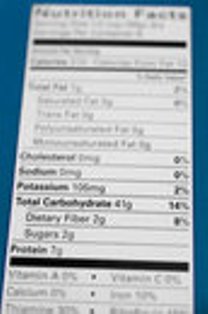
- Find the number of total carbohydrates in a food on the food’s nutrition label. Total carbohydrates are found in the top section of the label after the product’s sodium content.
- Find the quantity of dietary fiber in the food. Dietary fiber is usually located as a subheading beneath the total carbohydrate count.
- Subtract the amount of dietary fiber from the amount of total carbohydrates. If the product contains 20 grams of total carbohydrates and 3 grams of dietary fiber, then the product contains 17 net carbs.
- Look for sugar alcohols. Because sugar alcohols are not easily absorbed by the body, they do not count against your net carb total. If the food label contains a listing for sugar alcohol quantity, then you can subtract sugar alcohol content from your total carbohydrate count in addition to subtracting dietary fiber.
- Use a carbohydrate-counting guide. Many guides for foods that contain both their carbohydrate and dietary fiber counts are available in bookstores or online. These are especially helpful for foods that do not come with nutrition labels.
Count Carbohydrates During the Induction Phase
In the Induction phase, you should consume no more than 20 net carbs per day. In subsequent phases, you can consume more as long as they don’t interfere with your weight loss.
- Start by consuming 12 to 15 grams of net carbs through eating foundation vegetables. Foundation vegetables include leafy greens, broccoli, cauliflower and asparagus.
- Eat high-fat, low-carb dairy products during Induction for your remaining carbs. Examples include hard cheeses, cream and sour cream.
Count Carbohydrates During the Ongoing Weight Loss (OWL) Phase
Increase your carb intake gradually during OWL (Ongoing Weight Loss). Every week, add 5 grams of net carbs to your diet. As long as you continue to lose weight, you can continue gradually adding more carbohydrates to your diet. If weight loss stalls, you can gradually cut back on your carbohydrates until you start to lose weight again.
- Start eating nuts and seeds again. Avoid chestnuts, which contain too many net carbs.
- Add in some fruit the next week. You can eat berries, cherries and melon. Avoid watermelon, however, because it will raise your blood sugar rapidly.
- Vary your dairy. After you incorporate fruit, you can add in whole milk yogurt and fresh cheeses, including ricotta and cottage cheese.
- Add legumes next. These include chickpeas, lentils, peanuts and beans.
- Drink some tomato or vegetable juice cocktails after you add in legumes. Continue to avoid fruit juices with the exception of lemon and lime juice.
Count Carbohydrates During Pre-Maintenance and Maintenance
Add 10 grams of net carbs each week during Pre-Maintenance and Maintenance. Your weight loss should slow to a crawl during this period because you are working to find your Atkins Carbohydrate Equilibrium, or ACE. Your ACE is the number of net carbs you can consume each day without gaining weight.
- Eat a greater variety of fruit. Enjoy apples, citrus fruits and other fruits that are lower in sugar but high in fiber. Be wary of fruits high in sugar such as banana, pineapple and watermelon.
- Start eating high-carb vegetables again. You can add winter squash, peas and carrots back to your diet. Avoid regular potatoes.
- Add whole grains after you add high-carb vegetables. Focus on whole grains and continue to avoid high-carb refined grains such as white bread and white rice.
Tips
- In addition to watching your weight, pay attention to your cravings. If you start to crave more carbohydrate after adding additional net carbs to your diet, then you are probably eating too many carbs.
- Throughout each phase of Atkins, make sure to consume 12 to 15 grams of carbohydrates each day by eating foundation vegetables.
Warnings
- Don’t allow yourself to gain more than 5 pounds without addressing your carbohydrate intake. Lower your daily carb intake by 10 to 20 grams until your excess weight retreats.
Things You’ll Need
- Carbohydrate counting guide
Article provided by wikiHow, a wiki how-to manual. Please edit this article and find author credits at the original wikiHow article on How to Count Carbs on the Atkins Diet. All content on wikiHow can be shared under a Creative Commons license.